Shopify is primarily built for physical goods, but it supports digital products. Whether it is a good fit depends on what you are selling, how much automation you need, and whether you also sell physical products or do in-person sales alongside your digital ones.
This article gives you an honest picture of what Shopify can and cannot do for digital sellers so you can make the right decision before committing.
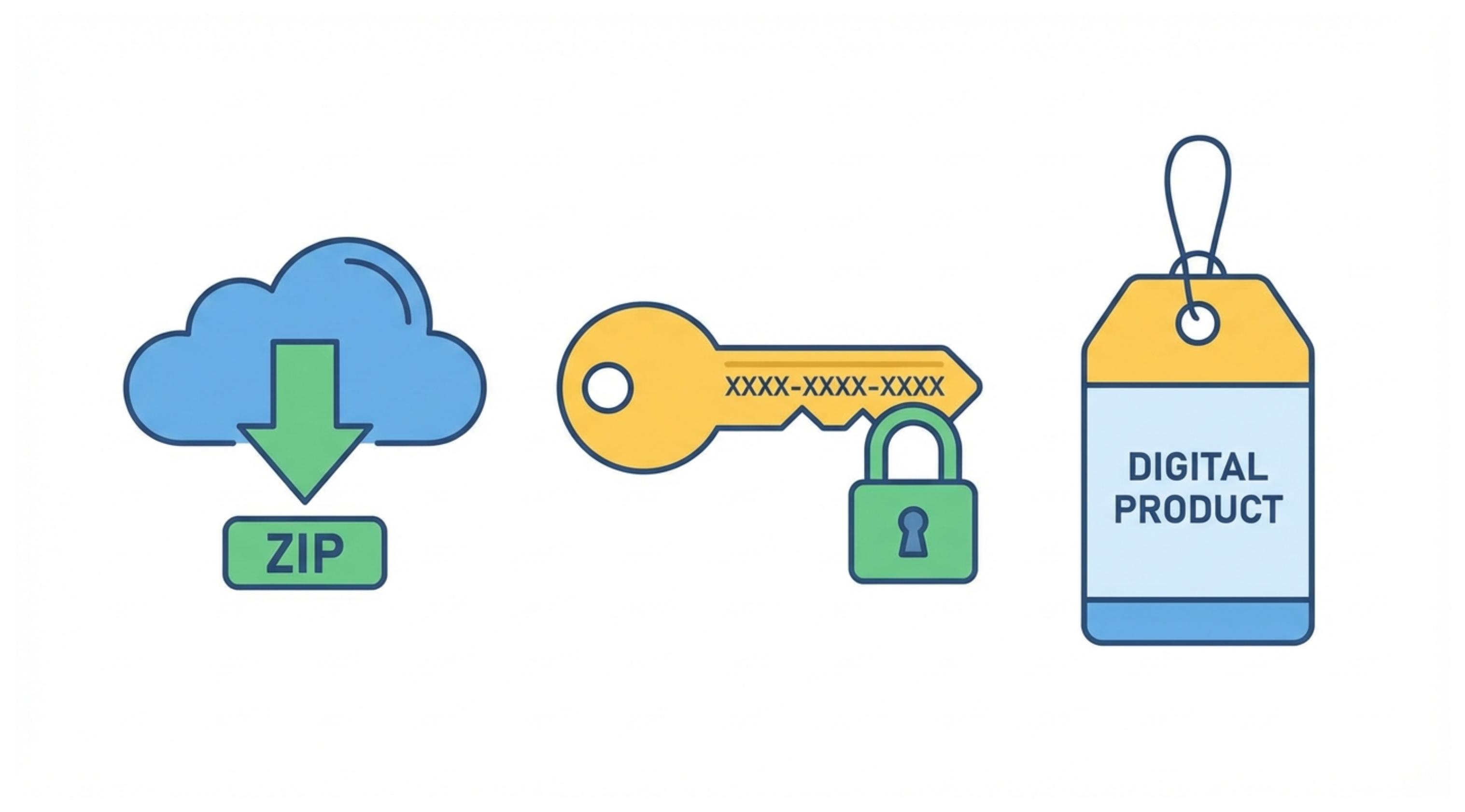
What Shopify Supports for Digital Products Out of the Box
Shopify lets you create products and mark them as non-physical by turning off the Requires shipping toggle in the product settings. When shipping is disabled, Shopify does not add a shipping rate at checkout and does not generate a fulfillment request to a shipping carrier.
That is the extent of Shopify's native support for digital products. It correctly handles the checkout flow for a non-physical item, but it does not:
Deliver a file to the customer
Send a download link by email
Generate or distribute a license key
Restrict how many times a file can be downloaded
Expire access after a certain period
All of that requires a third-party app or custom development.
The Free Option: Shopify Digital Downloads App
Shopify offers a free app called Digital Downloads, available in the Shopify App Store. It is made by Shopify and lets you attach a file to a product. After purchase, Shopify sends the customer an email with a download link and shows the link on the thank you page.
It handles the basics: PDF documents, ebooks, audio files, zip archives, and similar file types. Download limits and expiry times are not available in the free app. Any customer who has the link can download the file repeatedly.
For simple use cases like selling a PDF guide, a recipe ebook, or a printable template, the free Digital Downloads app is enough. You can also customise the order confirmation email to include product-specific delivery instructions or download guidance, without needing a paid app for that part either.
When You Need a Paid App
If you need more control over delivery, access, or the post-purchase experience, a paid app is necessary. Common needs that require a paid app include:
License key delivery. If you sell software, plugins, or any product that requires a unique license key per purchase, the free Digital Downloads app does not handle this. Apps like Sky Pilot and BIG Digital Downloads support more advanced delivery workflows including license keys, download limits, and streaming access for video content.
Download limits and expiry. If you want to limit how many times a customer can download a file, or make a link expire after 48 hours, you need a paid app.
Streaming or access-based delivery. If you sell video courses, membership content, or audio files that you want customers to stream rather than download, you need an app that hosts and serves the content. Apps like Courses by Shopify (available on some plans) or third-party tools like Teachable integrated with Shopify handle this.
Instant access on the thank-you page. The free app sends an email, but there is a delay. Some paid apps display the download link immediately on the order confirmation page before the email arrives.
How Digital Product Taxes Work on Shopify
Tax rules depend on what you sell and where your customers live. Digital products are taxed differently from physical products in some regions.
Shopify can calculate tax for supported regions, but it does not decide whether you need to register, collect, or file taxes. Check your local rules before selling internationally. Shopify's digital product tax documentation explains the setup, including EU VAT.
Shopify vs. Dedicated Digital Product Platforms
Shopify is not the only option and may not be the best one depending on your situation.
Gumroad is built specifically for digital creators. It handles file delivery, license keys, subscription products, and pay-what-you-want pricing natively. The setup is simpler than Shopify, the fees are percentage-based (so no monthly subscription), and it includes a built-in marketplace where some creators find customers organically. If you sell exclusively digital products and do not need a full storefront or POS system, Gumroad is worth comparing.
Lemon Squeezy is another digital-focused platform that also handles merchant of record responsibilities, meaning it manages VAT and sales tax collection and remittance on your behalf across jurisdictions. This is a significant advantage if global tax compliance is a concern.
The main reason to choose Shopify over these alternatives is if you need to sell physical and digital products together under one storefront, want Shopify's POS system for in-person sales, or plan to expand into physical goods later and want one system. In that mixed-catalog scenario, it is also worth knowing how to keep your digital products out of your main public catalog if you only want to sell them via direct link.